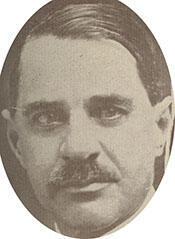
Ahiman Louis Miner (September 23, 1804 – July 19, 1886) was an American politician and attorney who represented Vermont in the United States House of Representatives from 1851 to 1853. He was born in Middletown, Rutland County, Vermont, to Gideon Lewis Miner and Rachel Davison Miner. As a boy he attended the local common schools and later Castleton Academy, receiving the basic classical and practical education typical of early nineteenth-century Vermont. In his youth he worked on his father’s farm, combining agricultural labor with his schooling, an experience that reflected the largely rural character of the state during this period.
After deciding to pursue a legal career, Miner studied law in Poultney and Rutland, Vermont. He was admitted to the bar in 1832 and began the practice of law in Wallingford, where he practiced from 1833 until 1836. In 1835 he moved to Manchester, Vermont, and continued the practice of law there, establishing himself as a prominent local attorney. His legal work in Manchester formed the foundation of a long professional life that would be closely intertwined with public service at the town, county, and state levels.
Miner’s early public career developed rapidly in the late 1830s. He served as clerk of the Vermont House of Representatives from 1836 until 1838, gaining experience in legislative procedure and administration. He was then elected a member of the Vermont House of Representatives, serving in 1838 and 1839. In 1840 he advanced to the upper chamber of the state legislature as a member of the Vermont Senate. During these years he built a reputation as a capable legislator and legal practitioner, which led to a series of additional judicial and county offices.
In the 1840s Miner held several important legal and judicial positions in Bennington County. He served as state’s attorney for Bennington County from 1843 until 1844, prosecuting cases on behalf of the state. He then served as register of probate for seven years, and from 1846 until 1849 he was judge of probate, overseeing the administration of estates and related legal matters. Beginning in 1846 he also served as a justice of the peace, a position he held continuously until his death in 1886, reflecting the sustained confidence of his community in his judgment and integrity. He returned to the Vermont House of Representatives in 1846, and would again serve in that body in 1853, 1861, and from 1865 until 1868, marking a legislative career that extended over three decades.
Miner was elected as a Whig candidate to the Thirty-second Congress, representing Vermont in the U.S. House of Representatives from March 4, 1851, until March 3, 1853. His election placed him in Washington during a period of intensifying national debate over slavery and sectional issues, though Vermont remained a stronghold of anti-slavery sentiment and Whig politics. After serving a single term, he declined to be a candidate for renomination in 1852 and chose to return to private life and his legal practice rather than continue in national office.
Following his service in Congress, Miner resumed the practice of law in Manchester, Vermont, while continuing to hold local and state offices. His later years were marked by ongoing involvement in public affairs through his legislative service in the 1860s and his long tenure as justice of the peace. He remained an active figure in the civic and legal life of his community well into old age, embodying the nineteenth-century Vermont tradition of citizen-lawyer and part-time legislator.
Ahiman Louis Miner died on July 19, 1886, in Manchester, Vermont. He was interred at Dellwood Cemetery in Manchester. His professional and public legacy is documented in a substantial body of personal and legal papers. The University of Vermont maintains a collection titled “The Ahiman L. Miner Papers,” which includes his correspondence, legal documents, and financial documents dating from 1800 to 1897, providing a significant primary source record of his life, career, and the legal and political history of Vermont in the nineteenth century.
Congressional Record