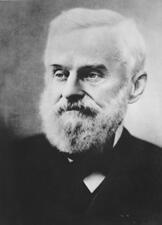
Adonijah Strong Welch (April 12, 1821 – March 14, 1889) was a United States Senator from Florida, the first president of Iowa State Agricultural College (now Iowa State University), and the first principal of Michigan State Normal School (now Eastern Michigan University). A member of the Republican Party, he served one term in the United States Senate during the Reconstruction era, from 1867 to 1869, and later became a prominent educational leader in the Midwest.
Welch was born in East Hampton, Connecticut, on April 12, 1821. In 1839 he moved west to Jonesville, Michigan, reflecting the broader pattern of New England migration into the Old Northwest. He pursued higher education at the University of Michigan, then a young but growing institution, and graduated in 1846. The following year, in 1847, he was admitted to the bar, indicating formal legal training and qualification to practice law. By 1849 he had turned to education, becoming a high school principal, and that same year he joined the California Gold Rush, spending about a year in California before returning to the Midwest.
Welch’s most significant early contribution to American education began in 1851, when he was appointed the first principal of Michigan State Normal School in Ypsilanti, Michigan, an institution established to train teachers for the expanding public school systems. He held this position from 1851 to 1865, overseeing the formative years of what is now Eastern Michigan University and helping to shape one of the country’s earliest state-supported teacher-training schools. In 1859 he married Eunice P. Buckingham; the couple had three children during their marriage. His tenure at the normal school coincided with a period of rapid educational reform and expansion in the antebellum and Civil War years.
In 1865, for health-related reasons, Welch left Michigan and moved to Pensacola, Florida, later settling in Jacksonville. In Florida he shifted from education and law into business and agriculture, establishing a lumber mill and engaging in orange growing, activities that tied him to the state’s postwar economic development. His personal life was marked by loss and renewal during this period: his wife Eunice died in 1867, and on February 3, 1868, he married Mary Beaumont Dudley (often referred to as Mary Beaumont Welch). With his second wife he had two additional children, bringing his total number of children to five.
Welch’s entry into national politics came during the Reconstruction era following the Civil War. As part of the process of restoring the former Confederate states to representation in Congress, Florida was readmitted to the United States in 1868. In this context, Welch was elected by the Florida legislature as a Republican to the United States Senate. His service in Congress occurred during a significant period in American history, when questions of civil rights, readmission of Southern states, and the redefinition of federal–state relations dominated the legislative agenda. Although he is recorded as having served from 1867 to 1869, his active tenure in the Senate lasted for less than nine months. During that time, he participated in the democratic process and represented the interests of his Florida constituents, contributing to the legislative work of Reconstruction. He declined renomination, choosing not to seek a longer Senate career.
Instead of continuing in elective office, Welch accepted an appointment as the first president of Iowa State Agricultural College in Ames, Iowa. He assumed this position in 1869, at a time when land-grant colleges created under the Morrill Act were beginning to define a new model of practical higher education in agriculture and the mechanical arts. Welch served as president of Iowa State from 1869 until his resignation in 1883. He regarded Iowa State as a progressive institution and took particular pride in the college’s willingness to admit women to its classes, an important step in the expansion of educational opportunities for women in the late nineteenth century. Under his leadership, the college developed its early curriculum and institutional identity as a land-grant university.
After stepping down from the presidency, Welch remained at Iowa State and continued his academic career. From 1885 until his death in 1889, he served as a professor of psychology at the college, reflecting his ongoing engagement with the emerging disciplines of the social and behavioral sciences. He spent his later years dividing time between Iowa and California. On March 14, 1889, he died at his summer home in Pasadena, California. Adonijah Strong Welch is interred at the Iowa State College Cemetery in Ames, Iowa, where his contributions to the institution are memorialized.
Welch’s legacy in American higher education is also commemorated at Eastern Michigan University. Welch Hall, named in his honor, was constructed there in 1895 and is the second-oldest building on the EMU campus. Originally known as the “Training School,” it served as the Teacher Training School from 1896 into the 1960s and over time has housed classrooms and various departmental offices. After years of poor maintenance led to its closure and near-demolition in the 1980s, Welch Hall was added to the National Register of Historic Places in 1984 and subsequently restored. Today it houses EMU’s executive offices, including the Office of the President, standing as a lasting tribute to Welch’s foundational role in the development of teacher education and public higher education in the United States.
Congressional Record