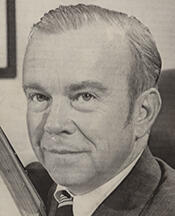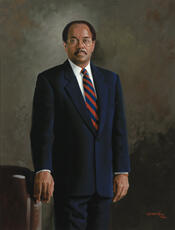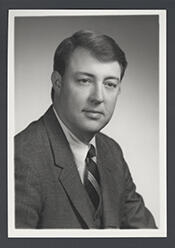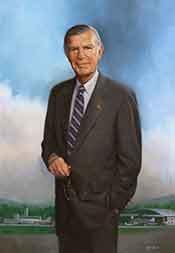
Adam King was the name of several notable public figures whose careers spanned politics, athletics, and academia across multiple centuries and countries. The individuals bearing this name include Adam King, a Scottish footballer; Adam King, a Canadian politician; Adam King, a United States congressman; Adam King, an English cricketer; and Adam King, a Scottish academic and university administrator active around the turn of the seventeenth century. Each of these men achieved distinction in his respective field, contributing to public life, sport, or scholarship in ways that reflected the institutions and societies of their times.
The earliest known figure of this name, Adam King (academic) (c. 1560–1620), was a Scottish university professor and administrator during a formative period for higher education in Scotland. Born around 1560, likely in Scotland, he came of age in the decades following the Scottish Reformation, when universities were being reshaped by new religious and intellectual currents. As a university professor, he would have been engaged in the teaching of classical languages, philosophy, or theology, disciplines central to the curriculum of the era. His role as an administrator placed him within the governance structures of a Scottish university, where he would have helped oversee academic standards, student affairs, and institutional finances at a time when universities were consolidating their roles as centers of Protestant learning and civic leadership. King’s career, extending into the early seventeenth century, coincided with the reigns of James VI of Scotland (later James I of England) and the broader integration of Scottish intellectual life into a British and European context.
Several centuries later, Adam King emerged as a surname associated with public service in North America. Adam King (Canadian politician) is recorded as a Canadian politician, indicating his participation in the political life of Canada, likely at the provincial or federal level. As a Canadian politician, he would have been involved in legislative deliberations, constituency representation, and the development or oversight of public policy within the Canadian parliamentary system. His work would have taken place within the framework of responsible government, party politics, and the evolving social and economic priorities of Canada, reflecting the concerns of his electorate and the broader national agenda. Although specific dates and offices are not detailed here, his identification as a Canadian politician situates him among those who contributed to the governance and democratic processes of Canada.
Another political figure bearing the same name, Adam King (congressman), served as a United States congressman, placing him within the federal legislative branch of the U.S. government. As a congressman, he would have been elected to the United States House of Representatives, representing a specific congressional district and participating in the drafting, debate, and passage of federal legislation. His service in Congress would have involved committee work, floor speeches, and engagement with national issues such as economic policy, infrastructure, foreign affairs, or domestic reform, depending on the period in which he served. In addition to his legislative duties in Washington, he would have maintained close ties to his home district, addressing the concerns of constituents and balancing local interests with national priorities. His tenure as a U.S. congressman places him within the long tradition of American representative government and the institutional history of Congress.
In the realm of sport, Adam King (footballer) is identified as a Scottish footballer, signifying a professional or semi-professional career in association football in Scotland. As a Scottish footballer, he would have progressed through youth and club systems, developing his skills in a country where football holds a central place in popular culture and community identity. His career likely involved competition in Scottish league structures, participation in training and tactical systems under professional coaching, and representation of his club in domestic competitions. Playing in Scotland’s football environment, he would have been part of a tradition that includes intense local rivalries, strong supporter bases, and a long history of organized football dating back to the nineteenth century. His role on the pitch—whether in defense, midfield, or attack—would have contributed to team performance and the broader sporting life of his club and community.
Another athlete of this name, Adam King (cricketer), is noted as an English cricketer, indicating his involvement in one of England’s most historically significant sports. As an English cricketer, he would have participated in the structured tiers of English cricket, which may include club cricket, county age-group or academy systems, and potentially professional county cricket. His development as a cricketer would have involved mastery of one or more of the game’s core disciplines—batting, bowling, or wicket-keeping—within the technical and tactical frameworks that define modern cricket. Competing in England, he would have been part of a sporting culture that values both the traditional longer formats and the newer limited-overs and Twenty20 forms of the game, contributing to team efforts in domestic competitions and, where applicable, representative fixtures.
Across these varied careers, the individuals named Adam King illustrate the recurrence of a common name in distinct historical and professional contexts. From a Scottish academic shaping university life around 1600, to North American legislators in Canada and the United States, to modern athletes in Scottish football and English cricket, each Adam King occupied a specific role within the institutional and cultural structures of his time. Their lives and work, though separate and unrelated, collectively demonstrate the breadth of public, scholarly, and athletic endeavors associated with this name over more than four centuries.
Congressional Record