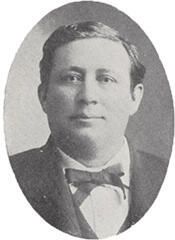
Adam Monroe Byrd (July 6, 1859 – June 21, 1912) was a Democratic U.S. Representative from Mississippi who served four consecutive terms in the United States Congress from 1903 to 1911. His congressional career unfolded during a significant period in American history, as the nation grappled with the political, economic, and social changes of the early twentieth century, and he participated in the legislative process as a member of the House of Representatives representing the interests of his Mississippi constituents.
Byrd was born on July 6, 1859, in Sumter County, Alabama. In his youth he moved with his family to Neshoba County, Mississippi, where he was raised and educated. He attended the common schools of the area and continued his studies at the Cooper Institute in Daleville, Mississippi, an educational institution that prepared him for professional training. Seeking a career in law, he enrolled at the Cumberland School of Law at Cumberland University in Lebanon, Tennessee, from which he graduated in 1884.
Following his legal studies, Byrd was admitted to the bar in 1885 and commenced the practice of law in Philadelphia, Mississippi, the county seat of Neshoba County. He quickly became involved in public service and educational administration, serving as superintendent of education for Neshoba County from 1887 to 1889. In this role he oversaw local public schools and contributed to the development of educational policy and administration at the county level, helping to shape the region’s educational framework during the post-Reconstruction era.
Byrd’s political career advanced as he entered state-level office in Mississippi. He served as a member of the Mississippi State Senate from 1889 to 1896, participating in legislative deliberations during a period of significant political realignment in the South. In 1896 he was elected to the Mississippi House of Representatives, where he served until 1897, resigning before the completion of his term. That same year he became prosecuting attorney for the tenth judicial district of Mississippi, a position in which he was responsible for representing the state in criminal prosecutions. Later in 1897 he was appointed judge of the sixth chancery district of Mississippi, a judicial office he held until his resignation in 1903. As a chancery judge, he presided over cases involving equity, property, domestic relations, and other civil matters, gaining a reputation that helped propel him to national office.
In 1903 Byrd entered the national political arena. A member of the Democratic Party, he was elected as a Democrat to the Fifty-eighth Congress and was subsequently reelected to the three succeeding Congresses, serving from March 4, 1903, to March 3, 1911. During his four terms in the U.S. House of Representatives, he contributed to the legislative process at a time when Congress addressed issues such as economic regulation, rural development, and the evolving role of the federal government in American life. Representing Mississippi, he participated in the democratic process and worked to advance the interests and concerns of his constituents within the broader framework of national policy debates. In 1910 he was an unsuccessful candidate for renomination, bringing his congressional service to a close at the end of the Sixty-first Congress.
After leaving Congress in 1911, Byrd returned to Philadelphia, Mississippi, where he resumed the practice of law. He continued his professional activities there until his health declined. He died on June 21, 1912, in Hot Springs, Arkansas, a city known at the time as a destination for those seeking therapeutic treatment for various ailments. Following his death, Adam Monroe Byrd was interred in Town Cemetery in Philadelphia, Mississippi, closing a career that had spanned local educational administration, state legislative and judicial service, and four terms in the United States House of Representatives.
Congressional Record