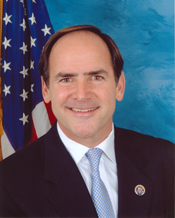
Abram Poindexter Maury (MURR-ee, December 26, 1801 – July 22, 1848) was an American politician and attorney who represented Tennessee’s eighth district in the United States House of Representatives. A member first of the White political faction and later of the Whig Party, he served two terms in Congress during a significant period in American history, participating in the legislative and democratic processes and representing the interests of his Tennessee constituents. He was a slaveholder.
Maury was born on December 26, 1801, near Franklin, Tennessee, on the plantation of his father, Abraham “Abram” Maury, Jr. His father was a prominent figure in early Tennessee politics, serving in the Tennessee Senate and lending his name to Maury County, Tennessee. Raised in a politically active and landholding family in Williamson County, Maury received preparatory schooling that equipped him for both literary and professional pursuits. At the age of sixteen, he became editor of a newspaper in St. Louis, Missouri, an unusually early entry into public and journalistic life that reflected both his education and his family’s connections.
In 1820 Maury entered the United States Military Academy at West Point, New York, continuing the pattern of elite training common among young men of his background in the early nineteenth century. He remained at West Point for about a year, leaving in 1821 to pursue the study of law. After departing the academy, he returned to Tennessee and became editor of a newspaper in Nashville, further developing his skills in writing, public communication, and political commentary while preparing for a legal career.
On January 26, 1826, Maury married Mary Eliza Tennessee Claiborne (1806–1852), daughter of Sarah Terrell Lewis and Dr. Thomas Augustine Claiborne, a member of a politically well-connected Southern family. The marriage strengthened Maury’s ties to influential regional networks in Tennessee and the broader South. Abram and Mary Eliza Maury had nine children together; in a reflection of both classical and numerical naming traditions, they named their seventh child Septima and their eighth Octavia.
Maury’s formal political career began in state government. He was elected to the Tennessee House of Representatives, serving in 1831 and 1832. During this period he combined legislative service with his ongoing legal studies and literary work. He was admitted to the bar in 1839 and practiced law in Williamson County, Tennessee, building a professional base that complemented his political ambitions. His legal practice, together with his experience in journalism and state politics, positioned him as a prominent Whig-aligned figure in Middle Tennessee.
At the national level, Maury was elected to the United States House of Representatives from Tennessee’s eighth congressional district. He first won election as a supporter of the White political faction to the Twenty-fourth Congress and was subsequently re-elected as a Whig to the Twenty-fifth Congress. He served in the House from March 4, 1835, to March 3, 1839. During his two terms, he took part in congressional debates and legislation at a time marked by intense national disputes over economic policy, party realignment, and the expansion of slavery, representing the interests and perspectives of his Tennessee constituents. He was not a candidate for renomination in 1838, and his service in Congress concluded at the end of his second term.
After leaving Congress, Maury resumed the practice of law in Williamson County. He also engaged in literary pursuits and lecturing, activities that drew on his early experience as a newspaper editor and his reputation as an educated public figure. Returning to state politics, he served again in the Tennessee House of Representatives in 1843 and 1844. He then advanced to the upper chamber of the state legislature, serving in the Tennessee Senate in 1845 and 1846, thereby extending his influence over state policy and maintaining his role in public life until shortly before his death.
Abram Poindexter Maury died near Franklin, Tennessee, on July 22, 1848, at the age of 46 years and 209 days. He was interred in the family cemetery at Founders Pointe near Franklin, Tennessee, among relatives whose political and social prominence had shaped both his upbringing and his career.
Congressional Record