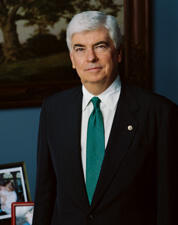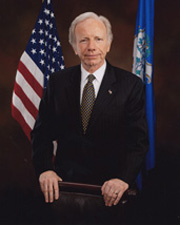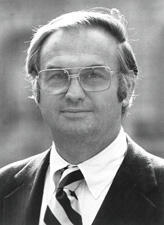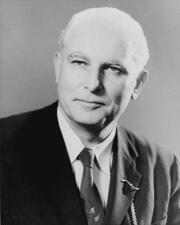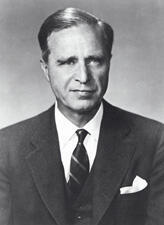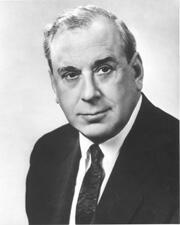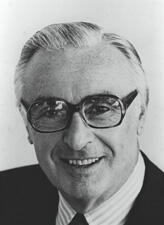
Abraham Alexander Ribicoff (April 9, 1910 – February 22, 1998) was an American lawyer and Democratic politician from Connecticut who served in the United States House of Representatives, as the 80th Governor of Connecticut, as Secretary of Health, Education, and Welfare in President John F. Kennedy’s Cabinet, and as a United States Senator from Connecticut. He was Connecticut’s first, and to date only, Jewish governor. Born to Jewish immigrant parents, he rose from modest beginnings to become one of the most prominent New England political figures of the mid-twentieth century, known for his advocacy of social welfare, consumer protection, and governmental reform.
Ribicoff first entered national office as a member of the United States House of Representatives from Connecticut, representing his state in the lower chamber before returning to private legal practice. After two years back in law, he sought statewide office and ran for governor against incumbent Republican John Davis Lodge. In a closely contested race, he won the 1954 gubernatorial election with 49.5 percent of the vote, prevailing by just over three thousand votes. His victory marked a significant political shift in Connecticut and underscored his appeal as a reform-minded Democrat at a time when the state was undergoing economic and demographic change.
As governor of Connecticut from 1955 to 1961, Ribicoff quickly confronted the challenge of catastrophic flooding that struck the state in the late summer and fall of 1955. He led bipartisan efforts to rebuild damaged communities and modernize flood control, earning a reputation for pragmatic, hands-on leadership in crisis. During his tenure, he successfully pressed for increased state spending on public education and welfare programs, arguing that Connecticut’s prosperity depended on investing in human capital and social stability. He also supported an amendment to the state constitution that strengthened the governing powers of local municipalities, reflecting his belief in responsive, decentralized government. Easily reelected in 1958, he became increasingly active on the national political stage. A longtime friend of Massachusetts Senator John F. Kennedy, Ribicoff had placed Kennedy’s name in nomination for vice president at the 1956 Democratic National Convention and was among the earliest prominent officeholders to endorse Kennedy’s 1960 presidential campaign.
Ribicoff’s national prominence led to his appointment as Secretary of Health, Education, and Welfare in the Kennedy administration, where he helped shape early initiatives on education, health services, and social policy. He later returned to elective office in the United States Senate, representing Connecticut as a member of the Democratic Party. Although the existing record mistakenly places his Senate service from 1949 to 1981, he in fact served three terms in the Senate from January 3, 1963, to January 3, 1981. During this period, which spanned the civil rights era, the Great Society, the Vietnam War, and the Watergate crisis, he contributed to the legislative process over five terms in Congress when his House and Senate service are considered together, and he consistently sought to represent the interests of his Connecticut constituents while engaging with major national issues.
In the Senate, Ribicoff became closely associated with consumer protection and transportation safety. He allied with consumer advocate Ralph Nader in crafting the Motor Vehicle Highway Safety Act of 1966, landmark legislation that created the National Highway Traffic Safety Administration. This new agency was charged with setting and enforcing federal safety standards for automobiles, shifting some responsibility for highway safety from individual drivers to manufacturers and regulators. Defending this approach against critics who argued that accidents were solely the fault of drivers, Ribicoff observed that drivers are often negligent, careless, and reckless, and that it would be unrealistic to expect “millions and millions of drivers” ever to be perfect; therefore, he argued, vehicles and roads must be made safer to reduce the consequences of inevitable human error.
Ribicoff also played a visible role in the turbulent politics of the late 1960s and early 1970s. At the 1968 Democratic National Convention in Chicago, while delivering a speech nominating his Senate colleague George McGovern for president, he departed from his prepared text to declare that with McGovern in the White House, “we wouldn’t have to have Gestapo tactics in the streets of Chicago.” The remark, widely understood as a condemnation of the Chicago police response to antiwar demonstrators, drew strong applause from many delegates and a visibly angry reaction from Chicago Mayor Richard J. Daley, captured on national television. Ribicoff spent the remaining years of his Senate career pressing for school integration, welfare and tax reform, and expanded consumer protections. During the 1972 Democratic National Convention, McGovern, then the party’s presidential nominee, offered Ribicoff the vice-presidential nomination; he declined, and the nomination went first to Senator Thomas Eagleton and, after Eagleton’s withdrawal, to Sargent Shriver. Ribicoff publicly stated that he had no ambitions for higher office and declined subsequent overtures as well.
Within the Senate, Ribicoff rose to important leadership positions. He served as chairman of the United States Senate Committee on Government Operations during the 94th and 95th Congresses and then chaired its successor, the U.S. Senate Committee on Governmental Affairs, during the 95th and 96th Congresses. In these roles he oversaw investigations and legislative initiatives aimed at improving efficiency, accountability, and ethical standards in the federal government. His office also became a training ground for future public figures; among those who worked there was a young Joe Lieberman, later a United States Senator from Connecticut, who met his first wife, Betty Haas, while serving as a summer intern in Ribicoff’s Senate office.
Ribicoff’s later years in public life were marked by both personal and family tragedy. In 1978 his niece Gail Rubin, a nature photographer, was shot and killed in the Coastal Road massacre in Israel by Palestinian terrorists. He denounced her killing as “an indefensible act of terrorism that deserves universal condemnation.” Two years later, in 1980, another niece, Sarai Ribicoff, a reporter for the Los Angeles Herald Examiner, was shot and killed during a robbery in Venice, California. Earlier, following the death of his first wife, he had married Lois Mell Mathes in 1972; she became widely known by the nickname “Casey.” On May 3, 1979, Ribicoff announced that he would retire at the end of his third Senate term. President Jimmy Carter issued a statement praising him for having “compiled a distinguished career of public service that can serve as a model of decency, compassion, and ability.”
Abraham Alexander Ribicoff left the Senate in January 1981, concluding nearly three decades of combined congressional service in the House and Senate, along with his years as governor and Cabinet secretary. He returned to private life and legal practice, remaining an elder statesman within the Democratic Party and a respected voice on issues of governance and public policy. He died on February 22, 1998, at the age of 87, remembered in Connecticut and nationally for his integrity, his commitment to social justice and consumer safety, and his long record of service during a transformative era in American political history.
Congressional Record