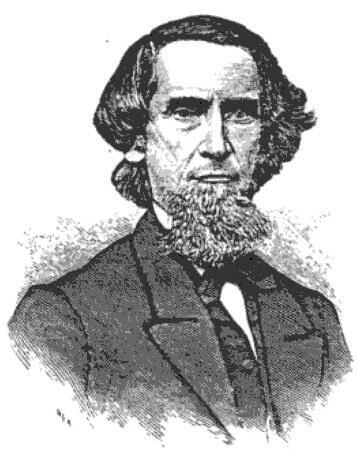
Abraham Phineas Grant (April 5, 1804 – December 11, 1871) was an American lawyer and Democratic politician who served one term as a U.S. Representative from New York from 1837 to 1839. His congressional service took place during a formative period in the nation’s political development, when debates over economic policy, internal improvements, and the evolving party system were central to the work of Congress. As a member of the Democratic Party representing New York, he participated in the legislative process and represented the interests of his constituents in the U.S. House of Representatives.
Grant was born on April 5, 1804, in New Lebanon, New York. He was educated in the public schools, reflecting the expanding but still limited educational opportunities available in early nineteenth-century rural New York. Demonstrating sufficient academic promise to pursue higher education, he enrolled at Hamilton College in Clinton, New York, one of the state’s leading institutions of higher learning during that era. His collegiate studies provided the classical and legal foundations that would support his later professional and political career.
After completing his education at Hamilton College, Grant turned to the study of law, following a common professional path for ambitious young men of his generation. He read law in the customary manner of the time and was admitted to the bar in 1828. Shortly thereafter, he commenced the practice of law in Oswego, New York, a growing community on the shores of Lake Ontario that was emerging as an important commercial and transportation center. His legal practice in Oswego placed him at the intersection of local economic development and the legal needs of a rapidly changing region.
Grant’s professional abilities and standing in the community led to his appointment as district attorney of Oswego County in 1835. In that capacity, he was responsible for prosecuting criminal cases and representing the interests of the state in local courts. His service as district attorney not only enhanced his reputation as a lawyer but also provided him with valuable experience in public office and exposure to the concerns of citizens in his county, laying the groundwork for his entry into national politics.
In 1837, Grant was elected as a Democrat to the Twenty-fifth Congress, serving from March 4, 1837, to March 3, 1839. His term coincided with the administration of President Martin Van Buren and the economic turmoil following the Panic of 1837, a period marked by intense debate over banking policy, federal and state economic responsibilities, and the role of government in responding to financial crisis. During his single term in the House of Representatives, Grant contributed to the legislative process as part of the Democratic majority, participating in the democratic governance of the country and advocating for the interests of his New York constituents. After completing his term, he did not seek or did not secure reelection, and his service in Congress concluded at the end of the Twenty-fifth Congress.
Following his departure from Congress, Grant resumed the practice of law in Oswego. Returning to his legal career was consistent with the pattern of many nineteenth-century legislators, who often alternated between public service and private professional work. In Oswego he continued to be a figure in the civic and legal life of the community, drawing on his experience as a former district attorney and member of Congress.
Abraham Phineas Grant died in Oswego, New York, on December 11, 1871. He was interred in Riverside Cemetery in Oswego. His life reflected the trajectory of a nineteenth-century American lawyer-politician who rose from local practice and county office to serve a term in the national legislature, and then returned to his profession, remaining rooted in the community where he had built his career.
Congressional Record